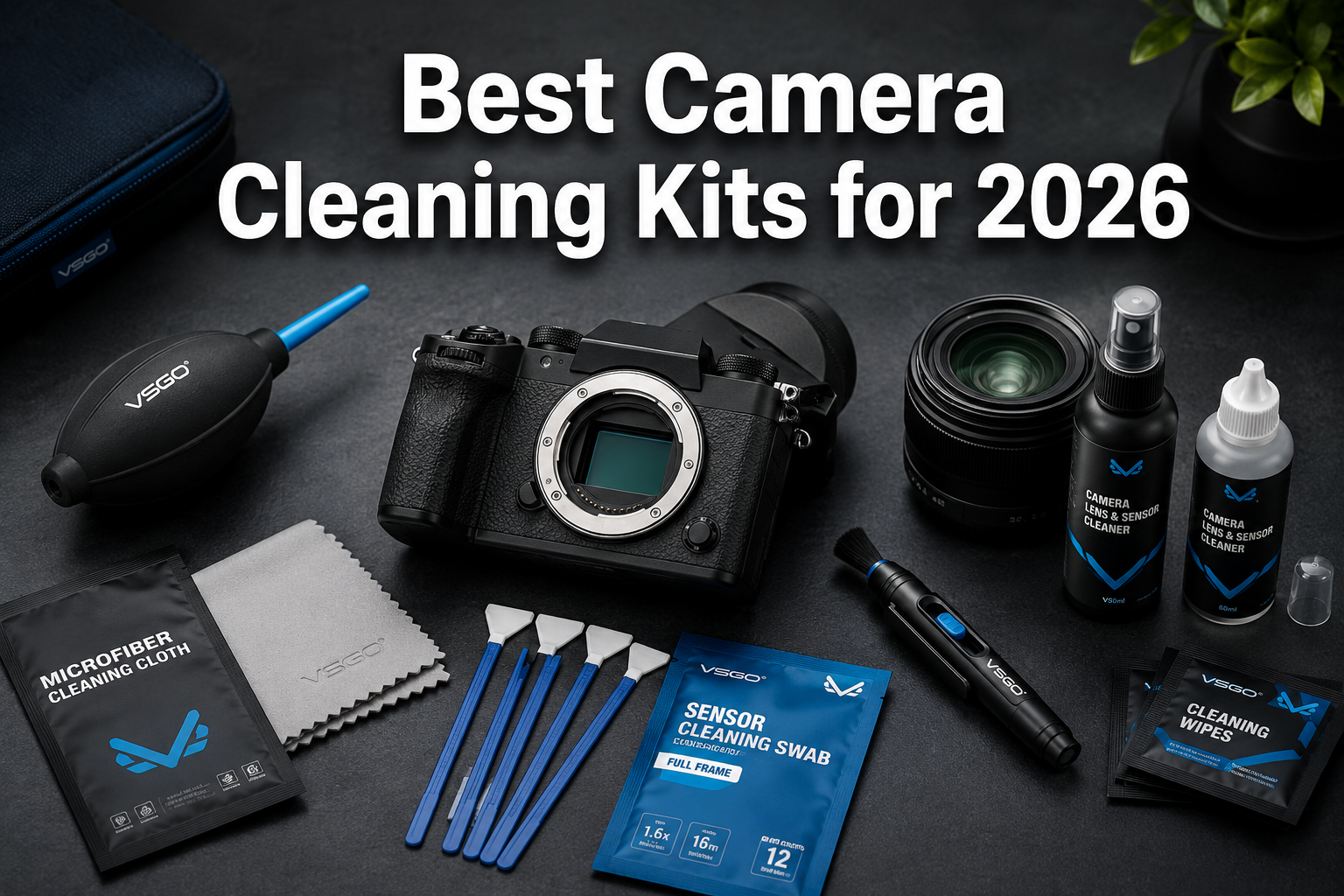
A single speck of dust on a full-frame sensor can ruin a $3,000 landscape shoot. That’s not hyperbole — it’s why most working photographers keep a dedicated camera cleaning kit in the bag right alongside spare batteries and memory cards. The right kit costs less than a decent SD card, yet it protects gear worth thousands and keeps your images sharp, streak-free, and print-ready. Investing in the best camera cleaning kits ensures you maintain optimal performance and longevity for your equipment. Furthermore, the best camera cleaning kits are essential for every photographer to enhance image quality.
Honest disclosure: This guide contains affiliate links — if you buy through them, I earn a small commission at no extra cost to you. The picks below are based on research and cross-checking trusted sources, not my usual hands-on testing. I’ve marked every product accordingly, because that’s how we do it here: real talk, no sugarcoating, no paid placements.
Quick Answer
The best camera cleaning kit for 2026 depends on your gear and shooting habits, but three kits consistently lead the field: the VSGO DKL-20F for full-frame sensor work, the Altura Photo Professional Kit for all-around DSLR and mirrorless maintenance, and the K&F Concept 4-in-1 for budget-conscious beginners. Expect to spend $15–$60 for a quality kit that includes a blower, sensor swabs, microfiber cloths, a lens pen, and alcohol-free cleaning solution.
When looking for the best camera cleaning kits, be sure to consider what your specific needs are to choose the perfect fit for your gear.
Using the best camera cleaning kits will prolong the life of your equipment and ensure your images remain flawless.
Key Takeaways
The market for the best camera cleaning kits has expanded significantly, and knowing what to look for is crucial.
Choosing the Best Camera Cleaning Kits for Your Needs
In 2026, the focus on the best camera cleaning kits is greater than ever, as many photographers rely heavily on their gear.
- A complete camera cleaning kit should include a rocket blower, microfiber cloths, lens pen, sensor swabs, and alcohol-free cleaning solution.
- VSGO, Altura Photo, K&F Concept, and Movo are the most trusted brands going into 2026.
- Budget kits start at $15; professional kits with full-frame sensor swabs run $40–$60.
- Never use household glass cleaner, tissues, or T-shirts on camera optics — the coatings can be permanently damaged.
- Sensor cleaning requires size-matched swabs: 24mm for full-frame, 16mm for APS-C.
- Clean lenses every few weeks; check the sensor every 500–1,000 shots or when you spot dark blobs on bright backgrounds.
- Wet cleaning tackles smudges and stubborn residue; dry cleaning handles loose dust.
- A professional sensor cleaning service costs $50–$100 per visit — a kit pays for itself after one use.
- Investing in the best camera cleaning kits gives you peace of mind while shooting.
What Should Be in a Good Camera Cleaning Kit
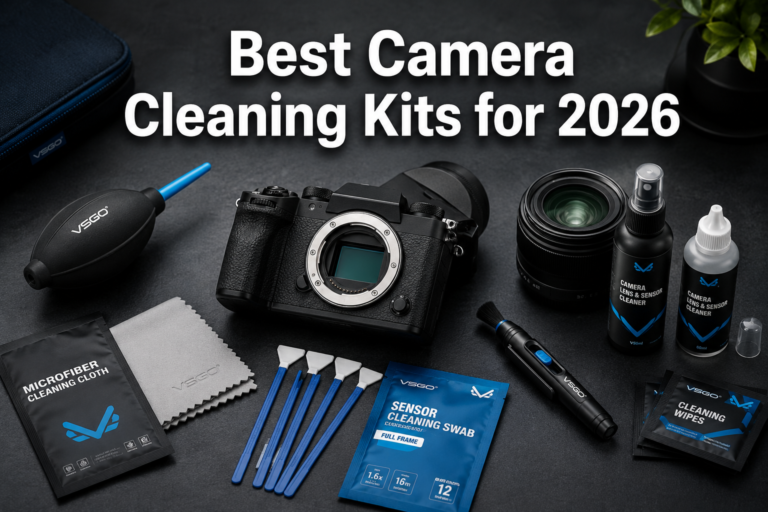
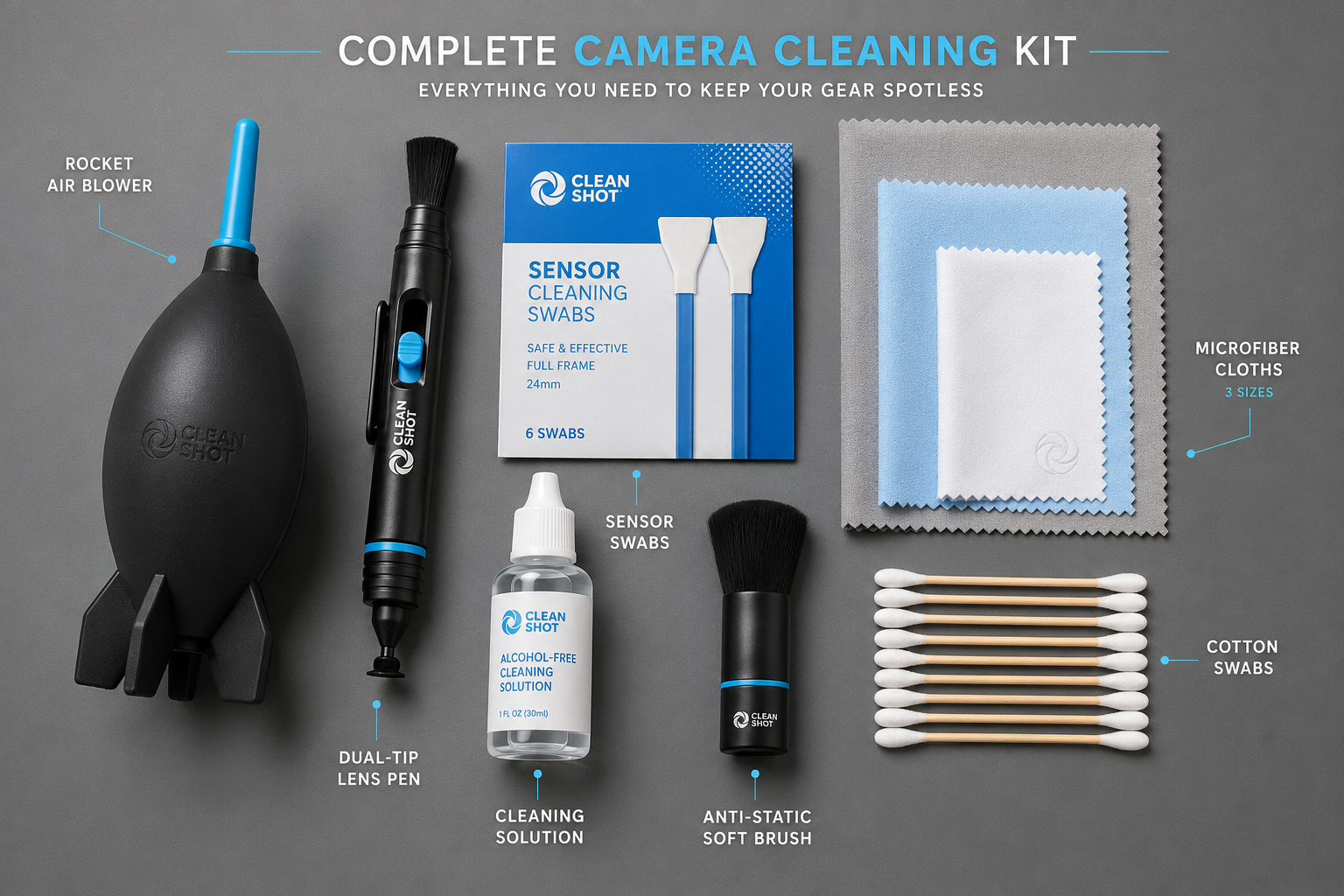
A good camera cleaning kit contains six core items: a rocket-style air blower, a soft anti-static brush, a lens pen, microfiber cloths, sensor swabs sized to your camera, and an alcohol-free cleaning solution. Anything less and you’ll end up buying extras; anything more is usually marketing padding.
Here’s what each item actually does:
- Rocket blower — dislodges loose dust from lenses, sensors, and camera crevices without touching the glass. Skip canned air; the propellants can leave residue.
- Anti-static brush — sweeps stubborn particles off the front element and body.
- Lens pen — a two-sided tool with a brush on one end and a carbon-tipped cleaning pad on the other. Great for fingerprints on the front element.
- Microfiber cloths — always use fresh, clean cloths. Two to four in different sizes covers most jobs.
- Sensor swabs — pre-moistened or dry pads on a paddle, sized to your sensor width.
- Cleaning solution — alcohol-free, ammonia-free formulas are safe for coated optics.
Kits like the Altura Photo Professional and VSGO DKL-20F package all of these in a rigid case, which matters more than most buyers realize. Loose tools rattle around, collect grit, and become contamination sources themselves.
Best Camera Cleaning Kit Brands for 2026
The four brands leading the 2026 market are VSGO, Altura Photo, K&F Concept, and Movo. Each has a distinct strength, so the “best” one depends on what you shoot.
Understanding the differences between brands of the best camera cleaning kits can streamline your decision-making process.
| Brand | Best For | Price Range | Standout Feature |
|---|---|---|---|
| VSGO | Sensor cleaning, pros | $30–$60 | Clinical-grade vacuum-sealed swabs |
| Altura Photo | All-around use | $20–$35 | Sturdy carry case, alcohol-free solution |
| K&F Concept | Beginners, budget | $15–$25 | Powerful odorless rubber blower |
| Movo | Content creators | $25–$40 | Deluxe multi-tool bundles |
| Camkix | Value packs | $18–$28 | 14 pieces including spare heads |
| Zeiss | Travel wipes | $8–$15 | Pre-moistened, streak-free wipes |
VSGO has become the go-to for sensor work because its swabs are vacuum-sealed and its blower moves air without recycling particles back into the chamber. Altura Photo wins on value — the professional kit gives you sensor swabs, a carbon-fiber brush, and a proprietary alcohol-free solution safe for all major camera brands. K&F Concept‘s 4-in-1 kit is the pick for anyone just starting out because it’s cheap, durable, and its rubber blower punches well above its price.
Choosing from the best camera cleaning kits will ultimately depend on your shooting style and requirements.
If you’re already invested in pro-grade YouTube camera gear, a mid-tier kit from VSGO or Altura is a natural fit..
How Much Does a Professional Camera Cleaning Kit Cost
Utilizing the best camera cleaning kits can help you avoid common cleaning mistakes.
A professional-grade camera cleaning kit costs between $40 and $60 in 2026. Budget kits start around $15, and specialty sensor cleaning kits for medium-format cameras can push past $80.
Here’s the breakdown by tier:
- Budget ($15–$25) — K&F Concept 4-in-1, Aispour 10-in-1, Camkix 14-in-1. Fine for lens exteriors and body cleaning.
- Mid-range ($25–$40) — Altura Photo Professional, Movo Deluxe Essentials. Adds sensor swabs and better solutions.
- Professional ($40–$60) — VSGO DKL-20F, VSGO Portable Pro. Full-frame swabs, rigid cases, better blowers.
- Specialty ($60+) — rugged waterproof cases, medium-format swab sizes, extended swab counts.
Decision rule: if your camera body cost more than $1,000, spend at least $30 on your cleaning kit. The math is simple — a single trip to a professional sensor cleaning service runs $50–$100.
For those who travel often, the best camera cleaning kits can help ensure your equipment stays clean and ready for action.
Camera Cleaning Kit for DSLR vs Mirrorless
By investing in the best camera cleaning kits, photographers can maintain their equipment’s longevity.
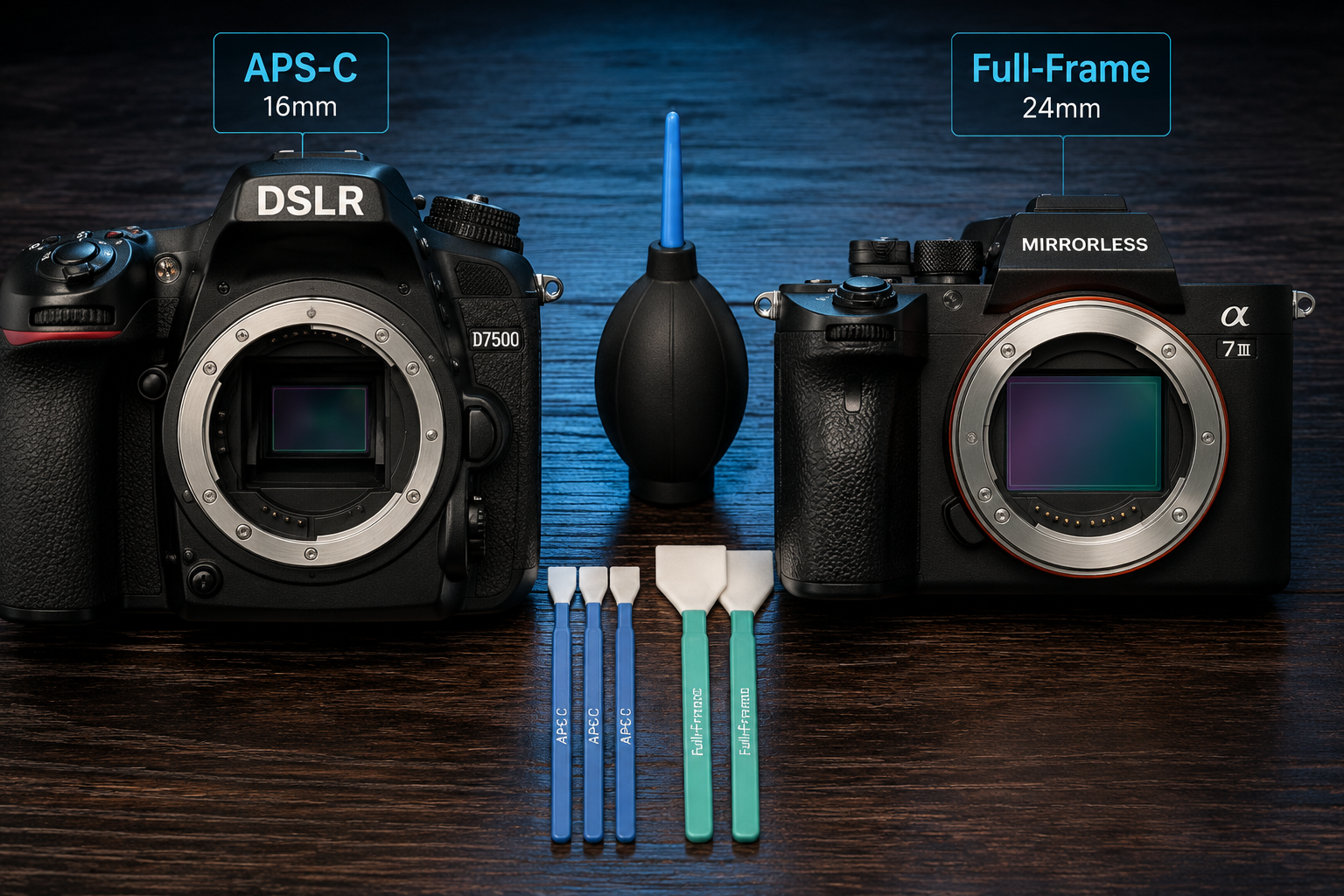
DSLR and mirrorless cameras need slightly different cleaning approaches, but the same kit usually works for both — you just need the right swab size for your sensor. Mirrorless cameras expose the sensor whenever the lens is off, so they collect dust faster and require more frequent cleaning.
Whether you own a DSLR or a mirrorless camera, the best camera cleaning kits can help maintain your equipment’s performance.
Maintaining a clean sensor with the best camera cleaning kits is crucial for optimal image quality.
Having access to the best camera cleaning kits is vital for any serious photographer.
Key differences to plan for:
- Sensor exposure — mirrorless sensors sit right behind the mount with no mirror to shield them. Change lenses pointing down, and do it quickly.
- Swab size — match to your sensor:
- Full-frame (Sony A7 IV, Canon R5, Nikon Z7): 24mm swabs
- APS-C (Fuji X-T5, Canon R7, Sony A6700): 16mm swabs
- Micro Four Thirds (OM System, Panasonic): 16mm swabs
- Mirror box — DSLRs need occasional mirror-chamber cleaning; lock the mirror up via the menu before swabbing the sensor.
- IBIS caution — many mirrorless bodies have floating sensors. Use gentle pressure; a rigid press can damage the stabilization mechanism.
The VSGO DKL-20F ships with 24mm swabs, making it a natural fit for full-frame shooters. My main bodies — the Canon EOS R7 and R50 — are APS-C, so they take 16mm swabs; most kits let you mix and match swab packs.
Regularly using the best camera cleaning kits ensures optimal image quality.
Using the best camera cleaning kits can significantly improve your photography outcomes.
How to Use a Camera Cleaning Kit Without Damaging the Lens
Following the recommended steps with the best camera cleaning kits can help you avoid damaging your gear.
Understanding how to use the best camera cleaning kits effectively can enhance your photography experience.
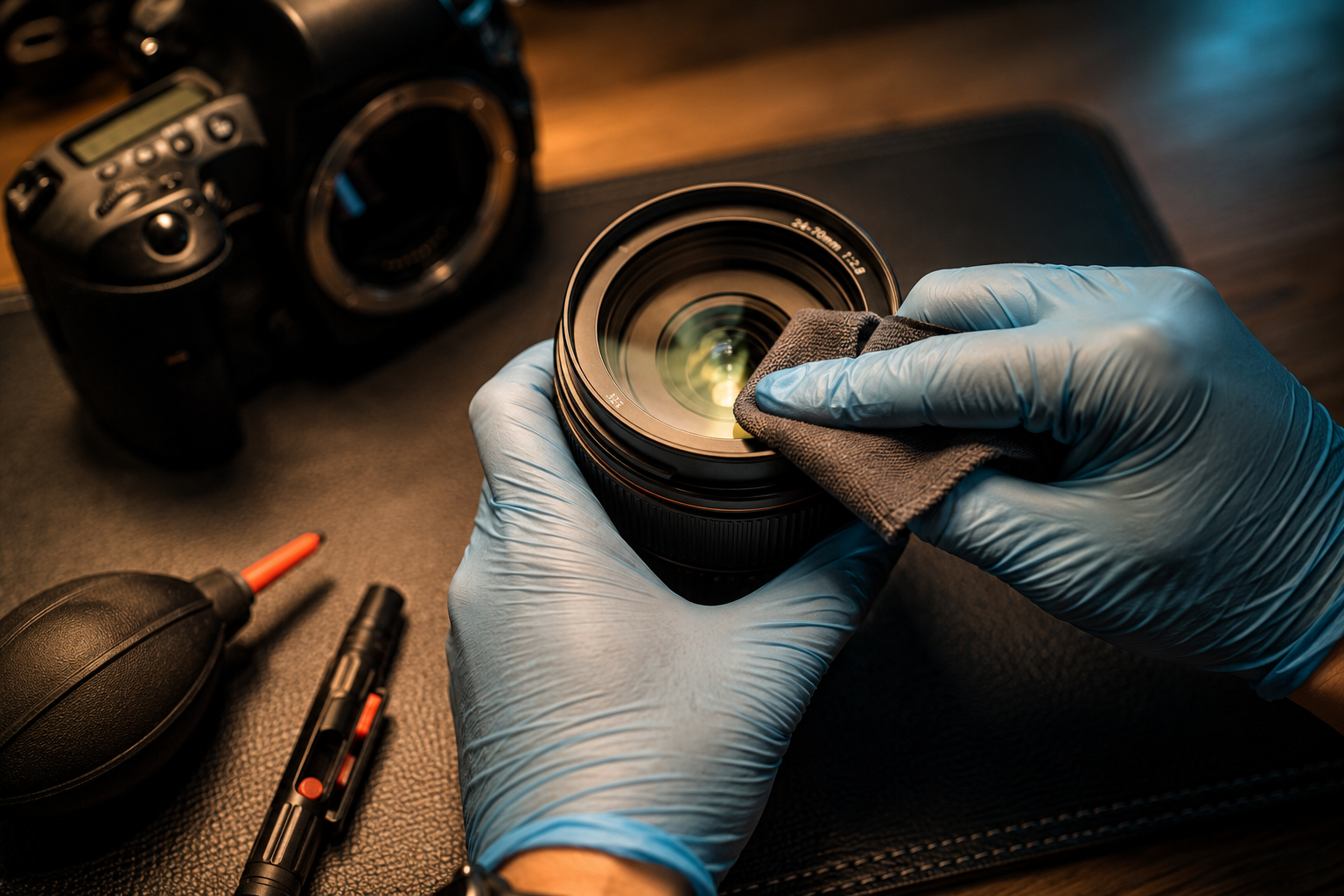
Use your camera cleaning kit in this order: blow first, brush second, wipe last. Skipping the blow step is the single biggest cause of scratched lenses — you’re grinding grit into the glass with a cloth.
The best camera cleaning kits provide photographers with the necessary tools to keep their lenses pristine.
Here’s the safe workflow:
- Blow off loose dust with the rocket blower. Hold the lens facing down so particles fall away.
- Brush lightly with an anti-static brush to move stubborn particles to the edge.
- Use the lens pen on fingerprints or oil smudges. Apply light pressure, in small circular motions from the center outward.
- Only if needed, wet-clean — put one or two drops of alcohol-free solution on a fresh microfiber cloth (never directly on the lens). Wipe in a spiral from center to edge.
- Dry-buff with the clean side of the cloth.
Common mistakes to avoid:
- Breathing on the lens to “moisten” it — saliva has enzymes that etch coatings.
- Using tissues or paper towels — even the softest tissue contains wood fibers that scratch.
- Applying solution directly to the lens — it can seep behind the front element and damage internal groups.
- Reusing a dirty microfiber — cloths pick up grit and become abrasive fast.
Rule to follow religiously: if the lens isn’t visibly dirty, don’t clean it. Every cleaning cycle wears the coating a little.
Owning the best camera cleaning kits can prevent costly repairs down the line.
Camera Cleaning Kit vs Professional Cleaning Service
The best camera cleaning kits should be part of every photographer’s essential gear.
A quality camera cleaning kit costs $30–$60 and lasts through dozens of cleanings, while a single professional sensor cleaning runs $50–$100 per visit. For routine maintenance, a kit wins on cost and convenience. For rare deep cleans — mold, liquid damage, or hard-fused debris — the pros are worth it.
For optimal performance, regularly using the best camera cleaning kits is recommended to keep your gear clean and functional.
Choose a kit when:
- Your camera has visible dust on the sensor or lens smudges
- You shoot regularly and need cleaning between jobs
- You travel and can’t ship gear to a service center
- Your issue is surface dust, oil, or fingerprints
Choose a professional service when:
- You see mold or fungus (internal issue, not surface)
- Liquid has entered the body or lens
- The sensor filter itself is scratched or has stuck-on debris after multiple wet swabs
- Your warranty specifically requires authorized service
Manufacturer service centers (Canon CPS, Nikon NPS, Sony Pro Support) charge $50–$150 for a sensor clean and often include a full body inspection. Independent shops are usually $40–$80. If you’re between one and three sensor cleanings per year, a kit pays for itself on the first use.
Best Budget Camera Cleaning Kit
Researching the best camera cleaning kits will help you make informed choices based on quality and effectiveness.
The best budget camera cleaning kit for 2026 is the K&F Concept 4-in-1 at around $15–$20. For a few dollars more, the Aispour 10-in-1 and Camkix 14-in-1 add sensor swabs and extra cloths that make them a better fit for interchangeable-lens cameras.
What you actually get in a budget kit:
- K&F Concept 4-in-1 — powerful odorless rubber blower, lens pen, microfiber cloth, cleaning solution. Great for compacts and point-and-shoots.
- Aispour 10-in-1 — adds sensor swabs and a soft brush; ideal for beginners with an entry-level DSLR or mirrorless.
- Camkix 14-in-1 — largest bundle with spare carbon heads for the lens pen and swabs sized for both APS-C and full-frame.
Finding the best camera cleaning kits is essential for any photographer wanting to achieve the best results.
Watch out for: off-brand kits with unspecified swab sizes, “cleaning solutions” that don’t disclose ingredients, or blowers made of hard plastic that crack after a few weeks. If the listing doesn’t say “alcohol-free” and “ammonia-free,” skip it.
Budget kits shine for lens and body exteriors. If you shoot professionally or with full-frame gear, step up to the mid-tier. A $20 kit for a $2,500 camera is false economy.
Upgrading to the best camera cleaning kits can save you money on professional services in the long run.
Versatility is key when choosing from the best camera cleaning kits available on the market today.
Camera Cleaning Kit for Sensor Cleaning
Explore various options among the best camera cleaning kits to find the one that suits your needs.
Camera Cleaning Kit for Sensor Cleaning
The best camera cleaning kits are designed to cater to both beginners and professionals alike.
Cleaning your gear with the best camera cleaning kits can be a rewarding practice, enhancing your shooting experience.
For sensor cleaning specifically, the VSGO DKL-20F Full-Frame Kit is the gold standard in 2026. It includes six 24mm sensor swabs, a dedicated sensor cleaner solution, a mini air blower, and a rigid case that keeps everything sterile between uses.
Sensor cleaning steps:
- Charge the battery fully — a mid-clean shutdown can drop the shutter or mirror onto the swab.
- Enable “sensor cleaning” or “manual cleaning” mode in the menu. This locks the mirror up (DSLR) or holds the shutter open (mirrorless).
- Remove the lens and hold the camera mount-down.
- Blow the sensor with the rocket blower — most dust comes off here.
- If spots remain, wet-swab: one to two drops of sensor solution on the swab, one smooth pass left-to-right, flip the swab, one pass right-to-left. Never scrub.
- Test with a bright-sky shot at f/16 or f/22. Dust shows as dark blobs
Edge cases:
- IBIS sensors (Sony, Fuji, Olympus) — use very light pressure; the sensor floats.
- Anti-dust coatings — most modern sensors have oleophobic coatings; use manufacturer-approved solutions only.
- Persistent spots — if two wet cleanings don’t fix it, stop. Take it to a service center before you make it worse.
For those needing to clean their sensors, the best camera cleaning kits offer specialized solutions tailored to your needs.
What's the Difference Between Wet and Dry Camera Cleaning
Always have the best camera cleaning kits handy to keep your gear in top shape for every shoot.
Dry cleaning uses air, brushes, and microfiber cloths to remove loose dust and light smudges. Wet cleaning uses a cleaning solution on swabs or cloths to dissolve oil, fingerprints, and stuck-on residue. Always start dry; go wet only if dry won’t cut it.
| Method | Best For | Tools | Risk Level |
|---|---|---|---|
| Dry | Loose dust, light smudges | Blower, brush, lens pen, microfiber | Low |
| Wet | Fingerprints, oil, water spots | Cleaning solution, sensor swabs, microfiber | Moderate |
Quick rules:
- Dry works 80% of the time. Try it first.
- Wet-clean the sensor no more than a few times a year — over-cleaning wears the coating.
- Never wet-clean a dusty surface. Blow it clean first, or you’re grinding grit around.
- Let all surfaces dry fully before reattaching the lens or storing the camera.
Camera Cleaning Kit for Travel
The best travel camera cleaning kit fits in a jacket pocket, keeps tools sterile in humid or dusty conditions, and covers the basics without weighing you down. VSGO’s Waterproof Case Kit and Zeiss Lens Wipes are the two most-recommended travel options going into 2026.
For travel, having the best camera cleaning kits at hand ensures you’re always prepared for unexpected situations.
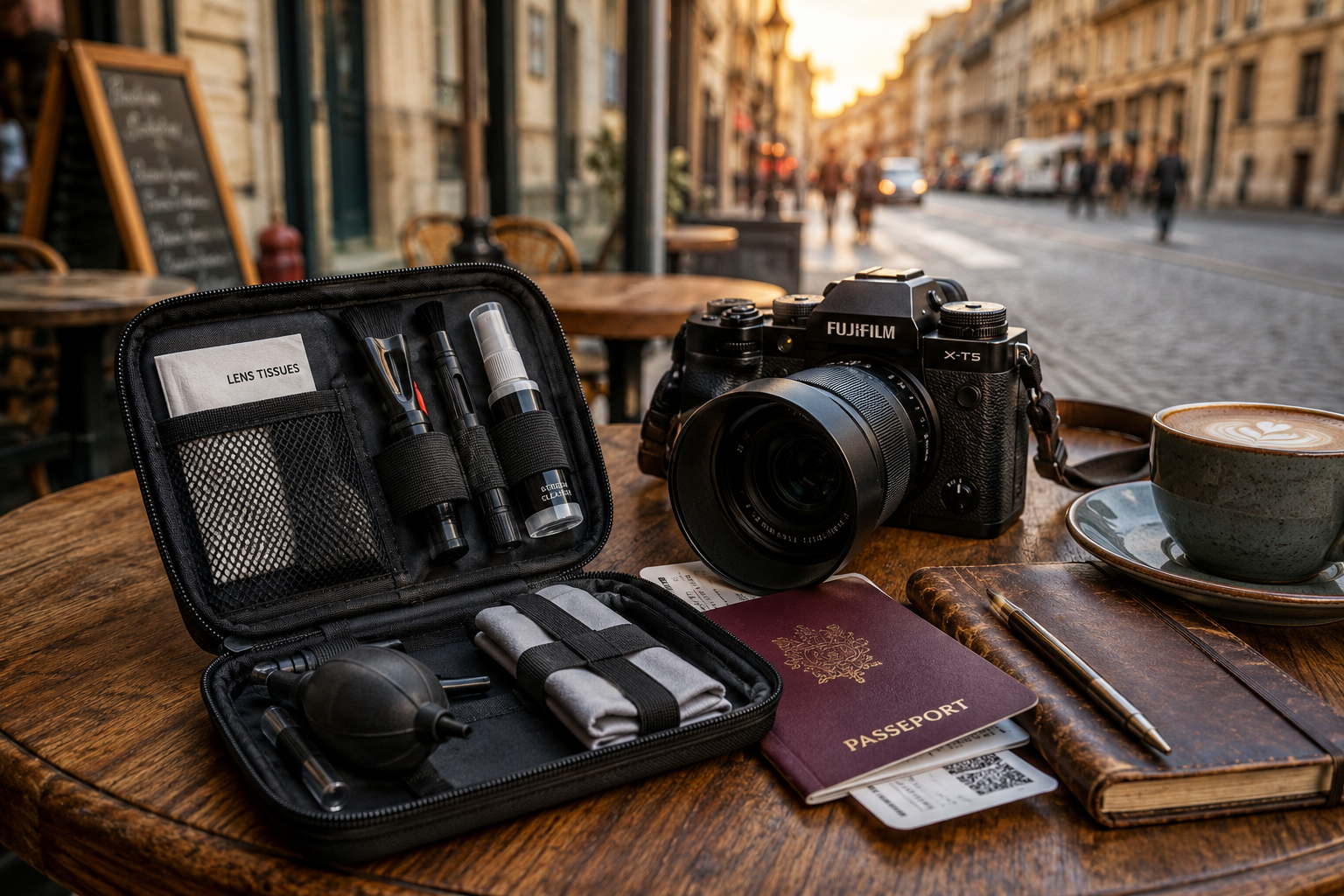
What to pack for travel:
- Small rocket blower (mini or compact size)
- Pack of pre-moistened lens wipes — Zeiss are the standard: individually wrapped and TSA-friendly
- One microfiber cloth in a sealed bag
- Dual-tip lens pen — replaces brush and cleaning pad in one tool
- Small pack of sensor swabs — only if you’re shooting for more than a week
For rugged travel — safari, beach, mountain, or the desert dust out here in the Southwest — the VSGO Waterproof Case Kit protects your tools from moisture, sand, and grit. Airtight storage matters when your kit lives at the bottom of a dusty backpack for two weeks.
If you’re building out a full travel photography setup, pair your cleaning kit with a rocket blower dedicated to your carry-on and Zeiss wipes in every jacket pocket. You’ll thank yourself the first time salt spray or red-rock dust hits your front element.
Can I Use Regular Cleaning Supplies on My Camera
No. Household cleaners, tissues, paper towels, T-shirts, and canned air can all damage cameras. Camera optics have delicate multi-layer coatings — anti-reflective, oleophobic, sometimes fluorine coatings — that are easily scratched or dissolved by the wrong chemicals or fibers.
Specifically avoid:
- Glass cleaner (Windex, etc.) — ammonia dissolves lens coatings.
- Isopropyl alcohol above 70% — can strip coatings over time; safer options exist.
- Paper towels and tissues — wood pulp scratches.
- T-shirts, sleeves — cotton picks up sand and grit throughout the day.
- Canned air — propellants leave residue; high pressure can damage sensors and IBIS mounts.
- Saliva/breath fog — enzymes and acids etch coatings.
Use instead:
- Alcohol-free, ammonia-free lens solution (Altura, Zeiss, VSGO formulas)
- Clean microfiber cloths (wash them separately — no fabric softener)
- Rocket-style hand blower
- Purpose-made sensor swabs
The five-dollar bottle of household cleaner isn’t worth the risk to a $1,500 lens.
Camera Cleaning Kit for Video Equipment
Video shooters need the same core kit as photographers, plus a few extras for gimbals, external monitors, and microphones. Larger sensors on cinema cameras (Sony FX3, Canon R5C, Blackmagic 6K) collect dust just like stills cameras, and dust shows up worse on 4K footage because you can’t hide it in the bokeh.
Video-specific additions:
- Extra microfiber cloths — for monitor screens and viewfinders
- Anti-static wipes — for cage and rig contacts
- Cotton swabs — for cleaning around gimbal motors and follow-focus gears without stripping lubricant
- Bulb blower — for keyboard and rig crevices (skip compressed gas)
Content creators building out a rig alongside pro wireless microphones or a premium gimbal setup should keep a dedicated kit for each shoot bag. Cross-contaminating cleaning tools between a dusty outdoor rig and studio gear is a fast way to scratch a $2,000 lens.
How Often Should You Clean Your Camera
Clean your lens front element every 1–2 weeks of regular use, your camera body monthly, and your sensor every 500–1,000 shots or whenever dust spots appear in test images. Over-cleaning wears coatings; under-cleaning ruins photos. Find the balance.
Realistic schedule for a working photographer:
- Daily — quick blower puff after each shoot; wipe rain or condensation off the body
- Weekly — inspect front elements, spot-clean fingerprints with the lens pen
- Monthly — deep body clean, check EVF/viewfinder, inspect sensor with a test shot
- Quarterly — full sensor wet-clean if needed, deep-clean lens rear elements
- Annually — service check for pro-grade bodies, replace old cleaning solutions
Sensor test: shoot a plain white wall or bright sky at f/16 or f/22. Any dark spots visible on the image indicate sensor dust. Fewer than 3–4 spots? Blow only. More than that, or persistent? Wet clean.
Signs you need to clean now:
- Visible smudges on the front element
- Dust spots in images (especially at small apertures)
- Foggy or hazy image quality
- Grit around dials or buttons
Best Camera Cleaning Kit for Beginners
For beginners, the Altura Photo Camera Cleaning Kit ($20–$25) or the K&F Concept 4-in-1 ($15–$20) offer the best mix of quality, safety, and clear instructions. Both include an alcohol-free solution safe for all major brands and enough tools to handle 95% of everyday cleaning tasks.
What to look for as a beginner:
- Alcohol-free, ammonia-free solution — no risk of damaging coatings
- Rocket-style blower — not canned air
- Clear instructions — some kits ship with a printed guide
- Small kit case — teaches good tool organization from day one
Skip until later:
- Full-frame sensor swabs (unless you own a full-frame camera)
- Specialty gel cleaners (advanced use only)
- Multi-piece cine kits (overkill for a beginner)
Beginner mistake that happens constantly: buying an expensive kit and never opening it. Take your kit out the day it arrives and practice on the front element with just the blower and lens pen. Muscle memory matters when you’re outdoors trying to save a shot.
If you’re just picking up your first serious camera and building out gear like a tripod or action camera, add a $20 cleaning kit to the same order. It’s the cheapest form of insurance you’ll ever buy.
Camera Cleaning Kit Quick-Compare
Camera Cleaning Kit Quick-Compare (2026)
| Kit | Price | Best For | Tier |
|---|---|---|---|
| VSGO DKL-20F | $45–60 | Full-frame sensors | Pro |
| Altura Photo Pro | $25–35 | All-around use | Mid |
| Movo Deluxe | $25–40 | Content creators | Mid |
| K&F Concept 4-in-1 | $15–20 | Beginners | Budget |
| Camkix 14-in-1 | $18–28 | Value packs | Budget |
| Zeiss Lens Wipes | $8–15 | Travel | Budget |
Frequently Asked Questions
Q: Can I clean my camera sensor myself?
A: Yes, with the right tools and technique. Use size-matched sensor swabs, a dedicated sensor solution, and follow your camera’s sensor-cleaning menu mode. Start with the blower alone — most dust comes off without any wet contact.
Q: How long does a camera cleaning kit last?
A: The hardware (blower, brush, lens pen, case) lasts years. Consumables like microfiber cloths need washing or replacement every few months, and sensor swabs are single-use. A $30 kit typically covers 12–18 months of regular use.
Q: Is it safe to use lens pens on coated lenses?
A: Yes — quality lens pens like the LensPen NLP-1 and those in Altura, K&F, and VSGO kits use carbon compound tips designed for coated optics. Use light pressure, and always blow off grit first.
Q: What’s the safest cleaning solution for lenses?
A: Alcohol-free, ammonia-free formulas made specifically for optics — Zeiss, Altura Photo, and VSGO all make safe options. Avoid household glass cleaners entirely.
Q: Do mirrorless cameras need more frequent cleaning than DSLRs?
A: Generally yes, because the sensor is exposed whenever the lens is off. Change lenses quickly, face the mount down, and check for sensor dust more often.
Q: Can I use the same kit for my camera and my smartphone lens?
A: Yes — blowers, lens pens, and microfiber cloths work fine on phone camera lenses. Skip the sensor swabs, obviously.
Q: Should I clean my camera after shooting in rain or snow?
A: Absolutely. Wipe the body with a dry microfiber immediately, let the camera acclimate before opening any compartments, and check the front element and mount for moisture. Don’t blow-dry with heat.
Q: Are pre-moistened wipes as good as bottled solution?
A: For lens exteriors, yes. Zeiss wipes are excellent for on-the-go cleaning. For sensor work, use dedicated sensor swabs and solution.
Q: What if I scratch my lens while cleaning?
A: Small scratches on the front element rarely affect image quality noticeably. Deep scratches or coating damage may need professional evaluation. Prevention beats repair — always blow first.
Q: Do I really need a rocket blower, or can I just use my breath?
A: You need the blower. Breath contains moisture, oils, and enzymes that can etch coatings. A $10 rocket blower is non-negotiable.
Conclusion
The best camera cleaning kit for 2026 comes down to matching your gear to the right tools. For most photographers, the Altura Photo Professional Kit is the sweet spot — comprehensive, affordable, and safe for every major brand. Full-frame shooters should step up to the VSGO DKL-20F for its 24mm sensor swabs and rigid case. Beginners and travelers do great with the K&F Concept 4-in-1 or a stash of Zeiss wipes in every bag.
Your next steps:
- Identify your sensor size (full-frame, APS-C, or Micro Four Thirds) so you buy the right swab dimension.
- Pick a kit tier based on your camera’s value — spend at least $30 if your body cost over $1,000.
- Practice on a clean lens the day the kit arrives so you’re confident in the field.
- Schedule a monthly sensor check using the f/16 white-wall test.
- Refresh microfiber cloths every three to six months, and never wash them with fabric softener.
Good cleaning habits protect thousands of dollars of gear for the cost of a couple of coffees. Buy the kit, use it correctly, and your images stay sharp, your sensor stays clean, and your equipment holds its resale value. For more gear reviews and buying advice, browse the full camera reviews section and tech gadgets library.